
Home & Tax Strategy
Section 01 | Buying, Building & Financing
Episode 03
Can You Deduct Interest on a Construction Loan?
By Colleen Kamolnik
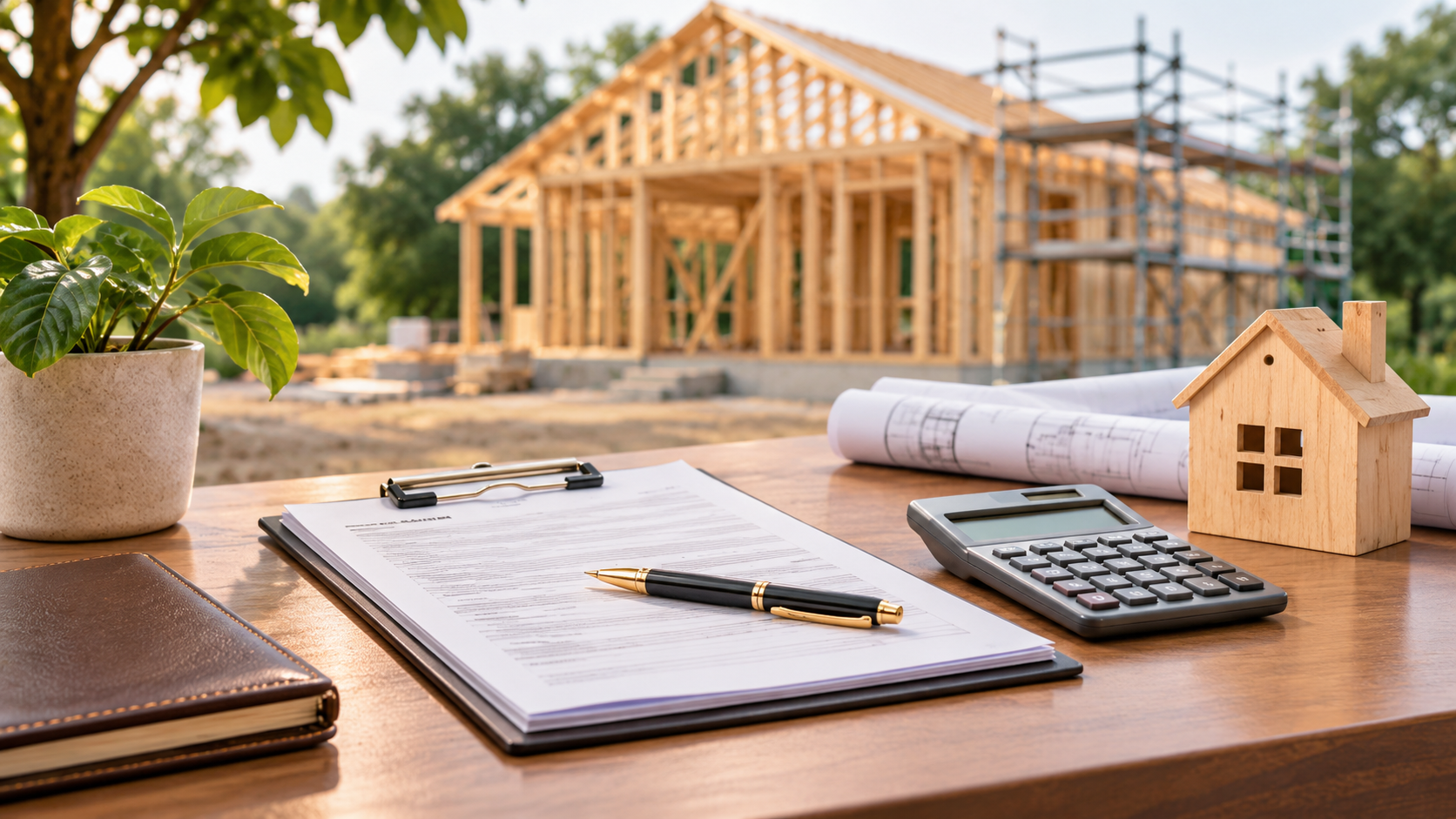
Can You Deduct Interest on a Construction Loan?
My husband and I are preparing to build our next home, so I've been spending quite a bit of time looking at construction financing.
We're comparing lenders, reviewing loan terms, and working through all the expenses that come with building a house.
And naturally, because I'm an accountant, I'm thinking about the taxes!
One question worth asking is whether the interest you pay on a construction loan is actually tax deductible.
After all, you're making loan payments, but you're not even living in the house yet.
Here's something that might surprise you.
You may be able to deduct construction loan interest before you ever move into your new home.
But there are some important rules to understand.
1. The IRS Has a Special Rule for Homes Under Construction
Normally, mortgage interest deductions apply to qualifying debt secured by a qualifying home.
But what happens when your house isn't finished?
The IRS allows a home under construction to be treated as a qualified home for up to 24 months, provided it becomes your qualified home when it's ready for occupancy.
The 24-month period can begin any time on or after construction starts.
That means you may be able to deduct qualifying mortgage interest during construction, even though you haven't moved into the property.
However, the loan must still satisfy the applicable mortgage interest requirements.
And just because the interest qualifies doesn't automatically mean you'll receive a tax benefit.
We'll come back to that in a moment.
2. What If You Purchased the Land Before Building?
Let's say you purchase five acres with plans to build your home a couple of years later.
You finance the land purchase but don't begin construction right away.
Can you deduct the interest on that land loan?
Generally, no.
Simply owning vacant land that you eventually intend to build on doesn't make it a qualified residence for the home mortgage interest deduction.
But once construction begins, certain interest may qualify under the special construction rules.
This is an important distinction if you're purchasing land well before you're ready to build.
The timing of construction matters.
3. What If You're Paying for Two Homes?
This is another consideration for anyone building a new home while continuing to live in their current one.
You may still have a mortgage on your existing home while making interest payments on the construction loan for your new property.
Can interest on both loans qualify?
Potentially, yes.
The mortgage interest deduction rules generally allow you to designate your main home and one qualifying second home.
A home under construction may qualify as that second residence during the permitted construction period.
However, the combined mortgage debt limits still apply.
And if you already own another second home, you'll need to consider how the rules apply to your situation.
This is an area worth reviewing before assuming both interest payments are deductible.
4. Does Every Construction Loan Qualify?
Not automatically.
Several requirements need to be considered.
The loan generally must be secured by the qualifying property.
The IRS has specific rules regarding secured mortgage debt. Simply borrowing money to pay construction costs doesn't automatically qualify the interest for the home mortgage interest deduction.
The home must become a qualified residence.
The special 24-month construction rule requires the property to become your qualified home when it's ready for occupancy.
Mortgage debt limits still apply.
For qualifying acquisition indebtedness incurred after December 15, 2017, the general federal limit is $750,000, or $375,000 for married taxpayers filing separately.
Older qualifying debt may be subject to different limits.
These limits generally apply to the combined qualifying debt on your main and second homes.
You generally need to itemize your deductions.
This is particularly important.
Even if construction loan interest meets the IRS requirements, it may not reduce your federal income taxes if taking the standard deduction is more beneficial.
5. Let's Look at an Example
Throughout this Home & Tax Strategy series, we're using the same construction example.
Land purchase - $100,000
Home construction - $350,000
Additional qualifying costs - $5,000
Total starting cost basis - $455,000
Now, let's assume you obtain a construction loan to finance part of the project.
During construction, you're making interest payments as funds are drawn from the loan.
Depending on the loan structure, the dates construction begins and ends, and the other applicable requirements, some of that interest may qualify for the home mortgage interest deduction.
But here's something important.
The amount you borrow and the amount included in your home's tax basis aren't necessarily the same thing.
The $455,000 represents qualifying acquisition and construction costs.
Your mortgage interest deduction is a separate calculation based on qualifying interest paid and the applicable limitations.
Understanding that distinction is important when planning your project.
6. Keep Your Construction Loan Records
If you're building, I recommend keeping a folder with the following documents:
Construction loan closing documents
Monthly loan statements
Records of interest paid
Documentation showing when construction began
Documentation showing when the home was ready for occupancy
Permanent mortgage documents if the construction loan converts or is refinanced
These documents can help establish whether your interest qualifies and when the deduction may apply.
And because construction loans often work differently from traditional mortgages, I recommend reviewing your loan structure with your tax advisor before assuming the interest will be deductible.
My Biggest Takeaway
You don't necessarily have to wait until you move into your new home to deduct qualifying construction loan interest.
But the timing of construction, the way the loan is secured, mortgage debt limits, and itemization requirements all matter.
And remember, a tax deduction shouldn't be the primary reason you choose a particular loan.
The goal is to select financing that makes sense for your overall financial situation while understanding the tax consequences.
Coming Next: Tracking Your Home's Cost Basis
When you're building a home, there are expenses everywhere.
Lumber, concrete, plumbing, electrical, permits, contractor payments, and site preparation.
But which of those expenses count toward your home's cost basis?
In our next article, we'll talk about why tracking these costs from the beginning can make a significant difference when you eventually sell.
Follow our complete Home & Tax Strategy series at joltstrategies.com/blog.
About JOLT Strategies
JOLT Strategies provides outsourced accounting, tax strategy, and advisory services to growing businesses and their owners. We believe good tax planning should happen throughout the year, not just when it's time to file a return.
This article is for general educational purposes and does not constitute individualized tax advice. Tax treatment depends on your circumstances and applicable tax law.
IRS references:
Related JOLT services
READY FOR THE NEXT STEP?